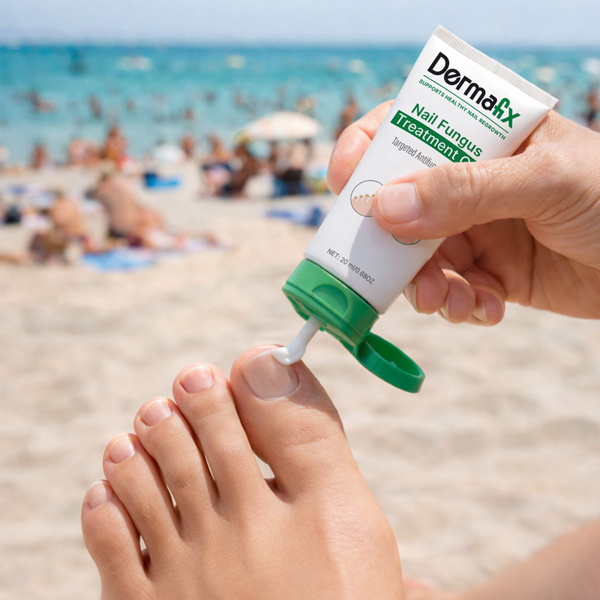
One of the most common questions about nail fungus is also one of the most honest: how long will this actually take? The answer depends on more factors than most people realise, and being realistic from the start helps avoid frustration mid-treatment.
Toenail fungus typically takes 6 to 18 months to fully clear
Visible improvement follows nail growth, not treatment start date
Age, circulation, and severity all affect your personal timeline
Consistency of treatment is the single biggest controllable factor
† Timelines are general estimates. Individual results vary based on infection severity and nail growth rate.
The Core Reason
Why Nail Fungus Takes So Long to Clear
Nail fungus (onychomycosis) is not like a skin infection you can see clearing week by week. The fungus lives beneath the nail plate, shielded from both your immune system and topical treatments. The only way to see a visibly clear nail is for infected nail tissue to grow out and be replaced by new, healthy nail from the base.
1.5mm
Average toenail growth per month
12–18mo
Full toenail replacement cycle
6–9mo
Average fingernail replacement cycle
Key insight: Clearance time is governed by nail biology, not just treatment potency. Even the most effective treatment cannot force a nail to grow faster. This is why patience and consistency are non-negotiable for any nail fungus protocol.
Realistic Timeline
Week-by-Week and Month-by-Month: What to Expect
The following is a general pattern based on typical progression with consistent daily topical treatment. It is not a guarantee and will vary significantly by individual.
Weeks 1–2
Routine Establishment
No visible nail change is expected at this stage. The treatment is beginning to penetrate the nail structure and reach the fungal environment.
The skin surrounding the affected nail may begin to feel less dry or irritated as moisturising ingredients take effect.
Weeks 3–6
Early Skin Improvement
Many users notice the perungual skin (around the nail) looking and feeling healthier. The nail itself may appear slightly less dull.
Still too early for meaningful visual nail change. Continuing daily application is critical at this stage.
Months 2–3
First Signs of Healthy Regrowth
The nail base (lunula area) may begin to show clearer, healthier-coloured new growth emerging. This is the most encouraging early milestone.
The infected portion of the nail is still present but may begin to look separated from the new healthy tissue growing in.
Months 4–6
Progressive Clearance
For mild to moderate infections, meaningful visual improvement should be evident at this point as healthy nail has now grown to occupy a noticeable portion of the nail plate.
Many users report this as the most motivating phase. Continuing treatment until full clearance remains important.
Months 6–18
Full Clearance (Severe Cases)
Moderate to severe infections, thicker nails, and older adults may require 9 to 18 months for full visible clearance as the nail completes one or more full growth cycles.
Treatment should be maintained throughout to prevent the fungus from recolonising new nail growth as it emerges.
Key Variables
Factors That Affect Your Recovery Timeline
No two nail fungus cases clear at the same rate. These are the main biological and lifestyle factors that influence how quickly you personally will see results.
🎂
Age
Nail growth slows significantly with age. Adults over 50 may grow toenails 30–50% more slowly than younger adults, directly extending the timeline for visible clearance. Peripheral circulation also decreases, reducing nutrient delivery to the nail bed.
🔬
Infection Severity
A mild superficial infection affecting only the nail surface may clear in 3–6 months. A deep subungual infection (under the nail) affecting the full nail plate may require 12–18 months of consistent treatment.
💧
Foot Moisture and Environment
Fungus thrives in warm, moist environments. Continued exposure (communal showers, tight footwear, sweaty feet) keeps the fungal load high and can counteract treatment. Controlling moisture is an often overlooked accelerator.
🩺
Underlying Health Conditions
Diabetes, peripheral arterial disease, and immune system conditions all slow recovery. These conditions reduce blood flow to the extremities and impair the body's natural capacity to support tissue repair and fight localised infection.
📅
Treatment Consistency
The single biggest controllable factor. Nail treatments only work when applied every day without significant gaps. Sporadic application extends the timeline considerably and can allow the fungus to re-establish in areas of new nail growth.
🧬
Fungal Strain
Different dermatophyte species vary in their responsiveness to topical treatments. Trichophyton rubrum, the most common cause, generally responds well to sustained topical treatment. Less common non-dermatophyte moulds can be more resistant.
Toenail vs Fingernail
Does Location Make a Difference?
Factor
Toenails
Fingernails
Average growth rate
1.5mm/month
3mm/month
Full replacement cycle
12–18 months
6–9 months
Typical clearance time
6–18 months
3–9 months
Fungal exposure risk
Higher (footwear, floors)
Lower
Recurrence risk
Higher
Lower
⚠️
Why toenails take longer: Toenails grow roughly half as fast as fingernails and are exposed to a much higher-risk environment daily. This biological reality means realistic toenail fungus clearance expectations should be 12 months minimum for anything beyond a very mild, early-stage infection.
Treatment Approach
How DermaFix Fits Into This Timeline
DermaFix is designed for exactly the kind of sustained daily treatment that nail fungus clearance requires. Its Deep Absorption Technology using Emu Oil and Squalane aims to get antimicrobial ingredients (Tea Tree Oil, Colloidal Silver) beneath the nail surface where the fungus resides, while simultaneously nourishing the nail bed to support healthy regrowth.
🎯
Weeks 1–4
Apply once daily to clean, dry nails. Focus on establishing the habit. Expect skin improvements but minimal visible nail change.
📈
Months 2–3
Continue daily application. Monitor for new healthy growth at the nail base. This is when the treatment's deep-penetration work begins to show.
✅
Months 4+
Maintain treatment until the full nail has grown out clear. Stopping early because the nail "looks better" is a common cause of recurrence.
90-day money-back guarantee through official website
FAQ
Frequently Asked Questions
Complete clearance typically takes 6 to 18 months, depending on infection severity, nail growth speed, and how consistently you apply treatment. Mild fingernail fungus may clear in 3 to 6 months. Severe toenail infections can take 12 to 18 months.
You cannot force nails to grow faster, but you can optimise conditions: apply treatment every day without missing doses, keep nails clean and dry, wear breathable footwear, and address any underlying health factors like poor circulation.
Two months is often not enough time for visible nail change, especially for toenails. At 1.5mm growth per month, only about 3mm of new nail has emerged in 2 months. The infected nail tissue is still present and will take several more months to grow out.
See a doctor if the infection is spreading, causing pain, you have diabetes or poor circulation, or if topical treatment has produced no improvement after 4 to 6 months of consistent use. Prescription oral antifungals have stronger evidence for severe cases.
Rarely. Untreated nail fungus almost always worsens over time as the fungus spreads deeper into the nail bed and to adjacent nails. It is not a condition that typically self-resolves without treatment.
DermaFix uses naturally-derived ingredients formulated for daily long-term use. It does not carry the liver-related risks associated with prescription oral antifungals, making it suitable for extended use. If you have any concerns, consult a healthcare professional.
Ready to Start Your Treatment Timeline?
DermaFix is designed for the consistent daily use that nail fungus clearance requires. Backed by a 90-day money-back guarantee through the official website.
With over 15 years of experience studying natural health solutions, Dr. Rhodes specialises in evaluating naturally-derived topical and supplement formulas for real-world applicability and evidence-based merit.
Her role is educational, not promotional. Her opinions do not replace medical advice.
Medical Disclaimer
The information on this page is for educational purposes only and is not intended to diagnose, treat, cure, or prevent any disease. Always consult a qualified healthcare professional before starting any new treatment. Individual results vary.
DermaFix is a topical cosmetic gel and is not evaluated or approved by the FDA for treatment of any medical condition.
Affiliate Disclosure: This page contains affiliate links. We may earn a commission if you purchase through our links, at no extra cost to you.